Archives 2025

10 Beautiful Entryway Decoration Ideas to Impress Every Guest

Your entryway is the first impression of your home — it should reflect your personality, style, and warmth. Whether you have a small hallway or a grand foyer, a few thoughtful touches can completely transform the space. In this blog, we’ll explore 10 creative entryway decoration ideas that are both stylish and functional.

 1. Minimal Modern Entryway

entryway decoration ideas, home entrance design, modern entryway, Indian home decor, small entryway ideas, foyer design, interior styling

Keep it simple yet elegant. Add a sleek console table, a round mirror, and a touch of greenery. Soft lighting and neutral tones create a peaceful and clutter-free vibe.

entryway decoration ideas, home entrance design, modern entryway, Indian home decor, small entryway ideas, foyer design, interior styling

Pro Tip: Choose furniture with hidden storage to keep the area clean.


 2. Bohemian Style Entryway

Add warmth with rattan furniture, macrame wall hangings, and colorful rugs. Layer textures using baskets and indoor plants for a cozy, artistic look.

entryway decoration ideas, home entrance design, modern entryway, Indian home decor, small entryway ideas, foyer design, interior styling

Pro Tip: Mix warm earthy tones like terracotta, beige, and mustard.


 3. Traditional Indian Entryway

Use carved wooden furniture, brass lamps, and vibrant rangoli or urli bowls filled with flowers. Add traditional artwork or deity frames for a spiritual touch.

Pro Tip: Use warm lighting to enhance the traditional feel.


 4. Luxury Modern Entryway

Marble floors, gold-framed mirrors, and statement chandeliers create a grand look. Add elegant artwork and a velvet bench to make it classy.

Pro Tip: Keep colors monochrome (white, gold, grey) for a luxurious appeal.


 5. Nature-Inspired Entryway

Bring the outdoors inside with potted plants, bamboo decor, and a jute rug. A wooden bench and natural textures will make your guests feel calm and welcome.

Pro Tip: Place a plant near the mirror for a refreshing visual balance.


 6. Mirror Magic

A stylish mirror can instantly make your space look bigger and brighter. Choose round or oval mirrors with unique frames for a modern twist.

entryway decoration ideas, home entrance design, modern entryway, Indian home decor, small entryway ideas, foyer design, interior styling

Pro Tip: Pair the mirror with a small console and vase of fresh flowers.


 7. Smart Storage Solutions

Add wall hooks, cabinets, or benches with drawers to organize shoes, keys, and umbrellas. This keeps your entryway both beautiful and functional.


 8. Gallery Wall Entryway

Display your favorite memories or artwork in matching frames along your entry wall. It adds personality and makes guests feel connected.


9. Lighting That Welcomes

Warm lighting sets the mood. Use pendant lights, wall sconces, or fairy lights to add charm to your entryway.


10. Festive Touch

During festivals, decorate with diyas, flower garlands, and candles. It keeps your entryway vibrant and full of positive energy.

entryway decoration ideas, home entrance design, modern entryway, Indian home decor, small entryway ideas, foyer design, interior styling

A well-decorated entryway doesn’t just welcome guests — it welcomes good vibes! Start small, mix styles, and add personal touches to make your entrance truly unforgettable.

The Timeless Tale Behind the Taj Mahal’s Architecture

A Monument Born from Eternal Love

Taj Mahal architecture, history of Taj Mahal, Shah Jahan and Mumtaz Mahal, Mughal architecture, Agra monuments, world wonders, Taj Mahal story, Indo-Islamic design

The Taj Mahal, often called the crown of palaces, stands on the banks of the Yamuna River in Agra, India. It was built by the Mughal Emperor Shah Jahan in memory of his beloved wife Mumtaz Mahal, who passed away in 1631 during childbirth. Grieving deeply, Shah Jahan vowed to create a monument that would embody their eternal love — and thus began one of the greatest architectural endeavors in human history.

Taj Mahal architecture, history of Taj Mahal, Shah Jahan and Mumtaz Mahal, Mughal architecture, Agra monuments, world wonders, Taj Mahal story, Indo-Islamic design

Architectural Brilliance Beyond Time

#TajMahal #Architecture #MughalDesign #Agra #WorldWonder #HeritageIndia #LoveInMarble

The Taj Mahal is not just a tomb; it’s an architectural masterpiece that blends Persian, Islamic, and Indian design influences. The lead architect is believed to be Ustad Ahmad Lahori, who skillfully coordinated a team of more than 20,000 artisans, craftsmen, calligraphers, and engineers.

  • The structure is built mainly from white Makrana marble, which changes its hue with the sunlight — glowing pinkish in the morning, milky white at noon, and golden under the moonlight.

  • The main mausoleum sits atop a rectangular raised platform with four slender minarets standing gracefully at each corner — slightly tilted outward to protect the tomb in case of earthquakes.


 Artistic Harmony & Symbolism

Every inch of the Taj Mahal’s surface reflects perfection and purpose:

  • The walls are inlaid with semi-precious stones forming delicate floral patterns (Pietra Dura work).

  • Intricate calligraphy of Quranic verses runs along the arches and doorways.

  • The central dome — standing at 35 meters high — is surrounded by four smaller domes, representing balance and symmetry.

  • The gardens, known as Charbagh, symbolize heavenly paradise, divided into four parts by water channels that represent life and purity.


 Engineering Marvels of the 17th Century

  • Foundations were built using deep wells filled with stone and timber, ensuring stability near the riverbank.

  • The entire structure was aligned with precise astronomical and geometric calculations, making it perfectly symmetrical from every viewpoint.

  • The optical illusion of the entrance gate makes the Taj appear closer as you walk away — a testament to Mughal engineering genius.


Legacy of the Taj Mahal

Completed around 1653, the Taj Mahal continues to captivate the world — not just as a symbol of love, but as an architectural wonder that defines Mughal craftsmanship and human emotion in stone.
In 1983, it was declared a UNESCO World Heritage Site, and today it stands as one of the New Seven Wonders of the World, attracting millions of visitors every year.

“The Taj Mahal is not just built of marble, but of the tears, devotion, and eternal love of an emperor for his queen.”

Sustainable Architecture – Building a Greener Future with Style

sustainable architecture, eco-friendly design, green buildings, modern sustainable homes, energy-efficient architecture, eco architecture, green living design, sustainable building materials, luxury eco homes.

The world is changing—and so are the ways we design and build our spaces. Sustainable architecture is more than just a trend; it’s a movement toward a greener, healthier planet. Imagine homes that breathe with nature, offices powered by the sun, and buildings that look stunning while reducing carbon footprints. That’s the magic of eco-friendly design — where style meets sustainability.


What is Sustainable Architecture?

Sustainable architecture focuses on creating spaces that respect the environment, use natural resources wisely, and minimize waste. It’s about designing buildings that are energy-efficient, eco-conscious, and visually elegant — proving that green can indeed be gorgeous!

Key features include:

  • Use of renewable materials like bamboo, reclaimed wood, and stone

  • Natural lighting and ventilation systems

  • Solar energy and rainwater harvesting

  • Smart insulation for reduced energy use


The Beauty of Eco-Friendly Design

Gone are the days when green buildings looked plain or industrial. Modern architects are blending luxury, innovation, and sustainability to craft spaces that feel both sophisticated and responsible.

From wood-marble combinations to glass facades that reflect natural light beautifully — sustainable architecture today is about aesthetic elegance with environmental intelligence.


Why Choose Sustainable Architecture?

Energy Savings: Reduce power bills through smart design and renewable energy.
Healthy Living: Cleaner air, more sunlight, and natural materials improve your wellbeing.
Durability: Eco-materials often last longer and require less maintenance.
Value Boost: Green-certified homes and offices attract higher market value.


Stylish Yet Sustainable: Design Inspirations

  1. White & Wood Harmony: Create a warm, organic look using wood accents against clean white walls.

  2. Glass & Greenery: Use glass panels for open views and natural brightness.

  3. Gold Touches: Subtle gold or brass highlights add luxury to eco-modern spaces.

  4. Grey Marble Magic: Grey tones mixed with marble create an elegant, sustainable finish.


Conclusion

Building a greener future doesn’t mean giving up on beauty—it means redefining beauty. Sustainable architecture proves that luxury and environmental care can coexist. Every eco-friendly structure built today is a step toward a brighter, cleaner tomorrow.

Let’s build the future—beautifully and sustainably.

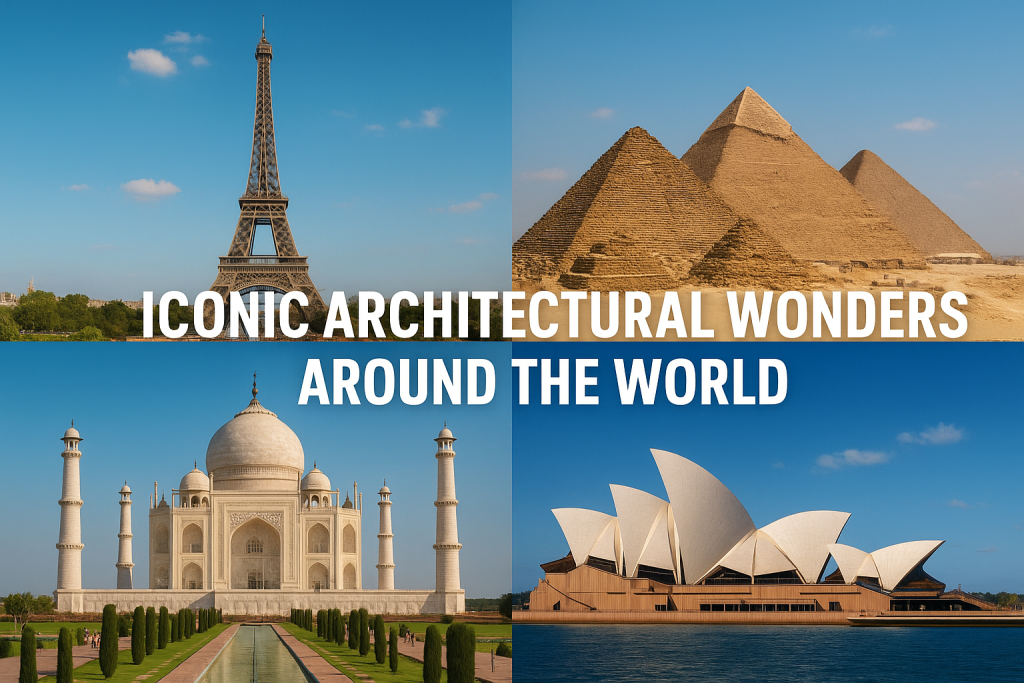
🌍 Iconic Architectural Wonders Around the World

Architecture is not just about buildings—it’s about culture, identity, and human creativity carved into stone, steel, and glass. Across the world, architects have created timeless masterpieces that continue to inspire awe. Let’s take a journey through some of the most iconic architectural wonders on our planet.

architectural wonders, iconic landmarks, world architecture, Taj Mahal, Burj Khalifa, Sydney Opera House, Parthenon, Great Wall of China, famous buildings, travel architecture blog


🕌 Taj Mahal – India’s Eternal Symbol of Love

A shimmering marble beauty in Agra, the Taj Mahal stands as a breathtaking symbol of love and devotion. Built by Mughal emperor Shah Jahan for his queen Mumtaz Mahal, its intricate carvings, symmetrical gardens, and stunning reflection in the Yamuna River make it one of the world’s most admired structures.

✨ Must-see : The Taj at sunrise, glowing in golden hues.

architectural wonders, iconic landmarks, world architecture, Taj Mahal, Burj Khalifa, Sydney Opera House, Parthenon, Great Wall of China, famous buildings, travel architecture blog


🏛️ Parthenon – Greece’s Timeless Classic

On the Athenian Acropolis, the Parthenon represents the glory of ancient Greece. This temple, dedicated to Athena, is a fine example of classical architecture with Doric columns and harmonious proportions.

✨ Must-see : Standing at the Parthenon ruins, overlooking the city of Athens at dusk.


🏙️ Burj Khalifa – Dubai’s Sky-Piercing Wonder

The Burj Khalifa isn’t just a building—it’s a statement. Towering at 828 meters, it is the tallest structure in the world. With its sleek design inspired by desert flowers and cutting-edge engineering, it redefines what modern architecture can achieve.

✨ Must-see : Watching Dubai’s skyline sparkle from the observation deck at night.


🎭 Sydney Opera House – Australia’s Architectural Jewel

With its iconic sail-shaped roofs, the Sydney Opera House is more than just a performance venue—it’s a global symbol of creativity. Nestled on Sydney Harbour, it blends innovation with beauty, making it one of the most photographed buildings in the world.

✨ Must-see : A night performance while the sails glow under vibrant projections.


🏯 Great Wall of China – The Endless Wonder

Stretching over 21,000 km, the Great Wall of China is not just an architectural feat but also a testament to human determination. Built across centuries to protect ancient China, its stone paths and watchtowers weave across mountains, valleys, and deserts.

✨ Must-see : Hiking along the Mutianyu section, where lush greenery surrounds the wall.


From the romantic domes of the Taj Mahal to the futuristic skyline of Dubai, these architectural wonders remind us of humanity’s limitless imagination. Each landmark tells a story—of love, faith, power, and vision—that continues to inspire generations.

Modern House Design Trends 2025 | Vidvik Architecture

The way we design and live in our homes is changing rapidly. In 2025, architecture is all about blending functionality, sustainability, and beauty. At Vidvik Architecture, we believe a home should reflect not only your lifestyle but also future-ready design. In this blog, we’ll explore the top modern house design trends that are shaping the homes of tomorrow.

Modern homes favor open floor plans where the kitchen, dining, and living areas flow seamlessly together. This creates a spacious feel and encourages family interaction.

Smart lighting, climate control, and security systems are no longer luxuries—they’re essentials. Vidvik Architecture designs integrate smart solutions for energy efficiency and convenience.

From solar panels to rainwater harvesting, eco-conscious features are at the heart of modern architecture. Sustainable building materials like bamboo, reclaimed wood, and natural stone are in demand.

“Less is more” is a major trend. Clean lines, neutral tones, and clutter-free designs make homes look elegant and calming.

Large glass windows, sliding doors, and green courtyards bring nature into the home. This not only improves air quality but also boosts mental well-being.

At Vidvik Architecture, we design homes that combine modern aesthetics, sustainable living, and personalized comfort. Whether it’s a small apartment or a luxury villa, our designs adapt to your lifestyle and future needs.

Reviving Heritage

Reviving Heritage: The Role of Adaptive Reuse in Urban Development

As urban landscapes continue to evolve, the challenge of preserving historical structures while accommodating modern needs has become increasingly significant. Adaptive reuse—the practice of repurposing existing buildings for new functions—has emerged as a sustainable and culturally enriching solution. At Vidvik Architecture, we believe that revitalizing heritage structures fosters a unique synergy between history and contemporary innovation, shaping cities with both character and functionality.

The Significance of Adaptive Reuse

Adaptive reuse presents a multitude of benefits, encompassing environmental sustainability, cultural preservation, and economic efficiency. By repurposing existing buildings, we mitigate demolition waste and conserve valuable resources that would otherwise be expended on new construction. Furthermore, this approach helps retain the historical identity of urban environments, fostering a sense of continuity and belonging within communities.

Case Studies: Transforming Legacy Structures for Modern Use

1. The Louvre, Paris – From Royal Palace to World-Class Museum

Initially constructed as a medieval fortress and later expanded into a royal palace, The Louvre in Paris underwent a remarkable transformation to become one of the most renowned museums globally. This adaptive reuse project preserved the essence of its historic architecture while repurposing the space for contemporary cultural engagement.

2. Tate Modern, London – From Power Station to Art Institution

Once an industrial power station, the Bankside Power Station in London was repurposed into the Tate Modern, a leading contemporary art museum. The adaptive reuse process retained much of the original structure, demonstrating the potential of industrial spaces to be transformed into vibrant cultural centers.

3. Indian Institute of Management (IIM) Bangalore – From Heritage Bungalows to Academic Spaces

Closer to home, IIM Bangalore exemplifies adaptive reuse by integrating colonial-era bungalows into a modern educational institution. These heritage structures were meticulously transformed into libraries and faculty offices while maintaining their historical significance.

4. Phoenix Marketcity, Bangalore – From Industrial Facility to Commercial Landmark

Previously an industrial site, Phoenix Marketcity has been repurposed into one of Bangalore’s most prominent retail and entertainment destinations. This transformation has revitalized the area, driving economic growth while preserving elements of its industrial past.

Vidvik Architecture’s Expertise in Adaptive Reuse

At Vidvik Architecture, we prioritize adaptive reuse as a means to merge architectural heritage with contemporary functionality. Our approach encompasses:

  • Sustainability: Employing eco-friendly materials and energy-efficient methodologies.

  • Structural Reinforcement: Assessing and strengthening existing frameworks to ensure long-term functionality.

  • Cultural Sensitivity: Preserving and honoring historical elements within modern designs.

  • Aesthetic Integration: Harmonizing traditional architectural features with contemporary design principles.

Revitalizing heritage structures not only safeguards our architectural past but also fosters sustainable urban development. Whether transforming an industrial site into a community hub or repurposing historical buildings into modern commercial spaces, adaptive reuse presents an innovative approach to urban planning.

Are you considering revitalizing an existing structure? Vidvik Architecture specializes in breathing new life into heritage buildings while ensuring they meet contemporary demands. Contact us today to explore transformative design solutions that honor the past while shaping the future.

Dream Home @30*40

Your Dream House in 30x40: Vidvik Architects Delivers Excellence

Building your dream home is a journey filled with excitement, aspirations, and countless decisions. At Vidvik Architects, we understand the significance of this milestone. Whether you envision a cozy haven or a modern masterpiece, our team is here to bring your vision to life.

Why 30×40 Homes are Perfect

In bustling cities like Bangalore, a 30×40 plot strikes the perfect balance between compactness and spaciousness. It offers enough room for:

  • Smart Layouts: Efficiently designed spaces for living, dining, bedrooms, and work areas.
  • Modern Amenities: Scope to include balconies, small gardens, or even a terrace.
  • Cost Efficiency: Ideal for those seeking a budget-friendly yet elegant home.

Our Approach to Quality

At Vidvik Architects, we prioritize quality in every step of the process. Here’s how we ensure your 30×40 dream house is built to perfection:

  1. Customized Designs: Every family is unique, and so should be their home. Our designs reflect your lifestyle, preferences, and functionality needs.
  2. Premium Materials: We source only the best materials to ensure durability, sustainability, and aesthetics.
  3. Expert Execution: With our skilled engineers and contractors, we bring precision and finesse to every corner of your home.
  4. Sustainable Solutions: From rainwater harvesting systems to solar energy setups, we incorporate eco-friendly options for a greener future.

What Sets Vidvik Architects Apart?

  • End-to-End Services: From architectural drawings and structural planning to interior design and MEP services, we handle it all.
  • Attention to Detail: Our team ensures every element, from tiles to paint, meets the highest standards.
  • Client Collaboration: We involve you in every decision to ensure your home truly feels like yours.

Popular Features for 30×40 Homes

  • Open Floor Plans: Maximizing space with a seamless flow between living areas.
  • Multi-Functional Spaces: Home offices, study corners, or entertainment zones.
  • Terrace Gardens: A relaxing retreat in the heart of your home.
  • Modern Aesthetics: Sleek interiors with contemporary design elements.

Let’s Build Together

Building a dream home is not just about bricks and mortar; it’s about creating memories, comfort, and a legacy. Vidvik Architects is committed to turning your dream into reality.

Ready to start your journey? Contact us today, and let’s make your 30×40 dream house a masterpiece!